In mechanical insulation, commercial construction, and HVAC manufacturing, selecting the proper sealing and joining materials directly impacts long-term thermal efficiency and structural durability. Among the vast array of industrial pressure-sensitive products available today, aluminum foil tape remains an indispensable solution for creating airtight, vapor-proof, and weather-resistant seals. However, because industrial applications range from extreme cold storage insulation to high-temperature ductwork, a standard single-ply tape is rarely a one-size-fits-all product. Understanding the distinct types of aluminum foil tape enables project engineers, contractors, and procurement professionals to match specific backing constructions and adhesive chemistries to their exact performance requirements. This comprehensive aluminum foil tape selection guide breaks down the structural categories, adhesive formulations, and specialized functions of modern foil tapes to help you make informed purchasing decisions for any project.
What Is Aluminum Foil Tape?
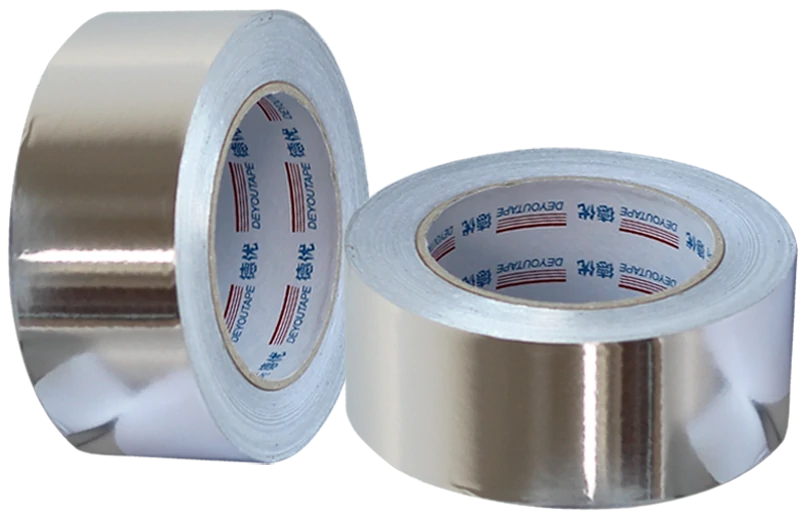
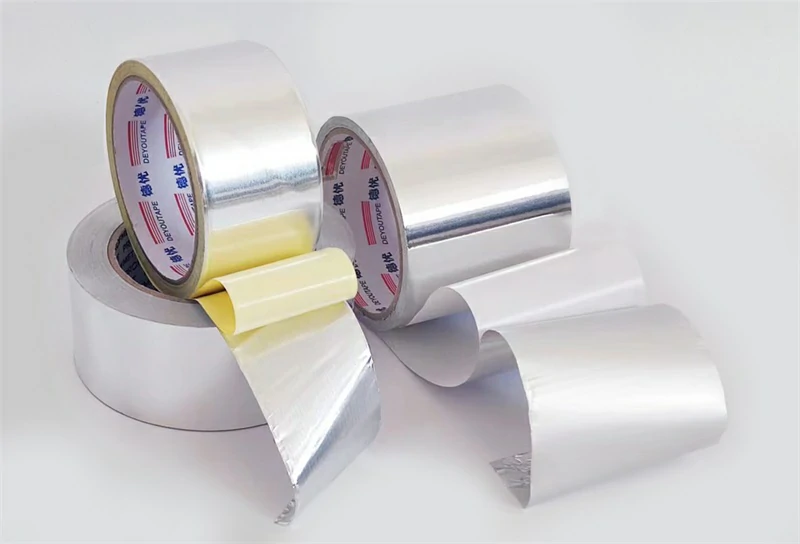
Aluminum foil tape is a multi-layered engineering material designed to provide thermal reflection, moisture barrier continuity, and durable environmental protection. At its core, standard foil tape consists of a precision-rolled aluminum metal backing laminated with an engineered pressure-sensitive adhesive and protected by a silicone-coated release liner. Unlike conventional plastic or cloth-backed utility tapes, the metallic composition of aluminum foil provides inherent resistance to ultraviolet light, thermal degradation, chemical exposure, and moisture vapor transmission.
When applied to compatible metal, fiberglass, or plastic substrates, aluminum foil tape forms a long-lasting seal that expands and contracts alongside metal surfaces during temperature fluctuations, preventing thermal bridging and air leakage in mechanical systems. Today, manufacturers produce numerous variations designed for different industries, making it important to learn how to choose aluminum foil tape effectively based on how these specialized products are categorized.
How Aluminum Foil Tape Is Classified
To select the most effective tape for a specific industrial or commercial application, professionals classify foil tapes across three primary engineering dimensions:
- Structural Backing: The physical construction of the top metallic layer, ranging from unreinforced dead-soft aluminum foil to heavy-duty composites reinforced with glass scrim, woven cloth, or polymer films.
- Adhesive System: The chemical matrix bonding the foil backing to the substrate, which dictates the tape's operating temperature range, initial tack, and long-term shear strength.
- Specialized Functionality: Tailored physical properties designed to meet rigorous industry compliance standards, such as flame retardancy, extreme temperature resistance, or electrical conductivity.
Understanding these classifications allows engineers and purchasing professionals to compare products accurately rather than relying solely on thickness or price.
Types of Aluminum Foil Tape
Classification by Structural Backing
The structural composition of the backing determines the tape's tensile strength, puncture resistance, and flexibility on contoured or irregular surfaces. While some tapes use unreinforced aluminum foil, others incorporate reinforcing materials to maximize durability.
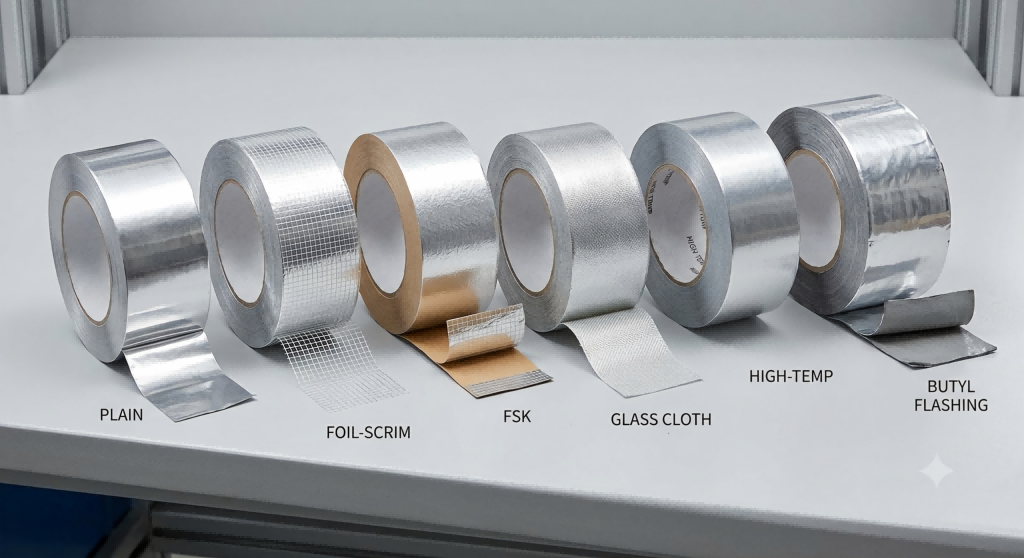
1. Plain Aluminum Foil Tape
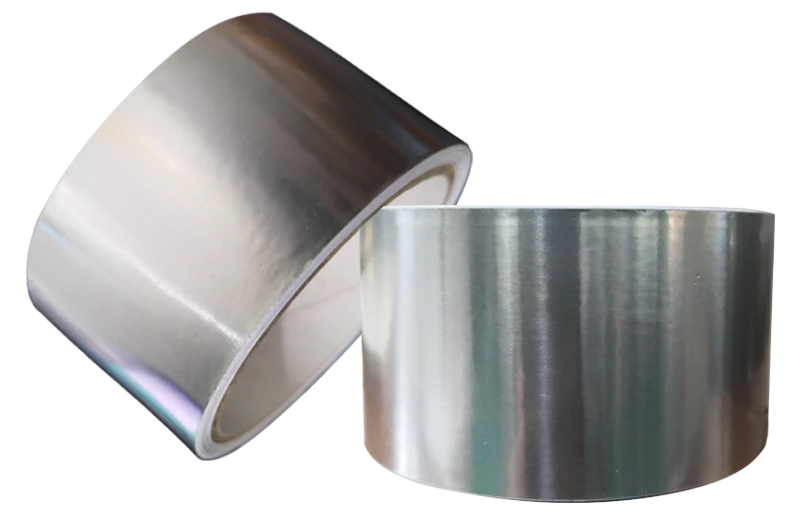
Plain aluminum foil tape consists of an unreinforced, dead-soft aluminum foil backing paired with a high-performance adhesive. Available in standard thicknesses ranging from 18 μm to 50 μm (0.7 mil to 2.0 mil), plain foil tape offers maximum conformability, making it easy to mold around curved joints, irregular metal seams, and complex pipe fittings. It provides an excellent thermal reflection and vapor barrier for general duct sealing, pipe insulation wrapping, and light reflective patching.
2. Reinforced Aluminum Foil Tape (Foil Scrim Tape)
When applications demand enhanced tear resistance and high tensile strength, reinforced aluminum foil tape—commonly known as Foil Scrim Tape—is the industry standard. This tape integrates a two-way fiberglass scrim mesh laminated between the aluminum foil facing and the adhesive layer. The embedded mesh prevents the tape from stretching or tearing during application under mechanical tension, making it ideal for sealing seams on rigid fiberglass duct board and flexible duct connections.
3. FSK Tape (Foil-Scrim-Kraft Tape)
FSK tape is a heavily reinforced composite product specifically designed to match the facing of Foil-Scrim-Kraft fiberglass duct insulation. Its backing features a tri-directional fiberglass scrim mesh bonded between a thin layer of aluminum foil and a heavy Kraft paper li
ner. The scrim provides structural strength while the kraft paper improves dimensional stability and aesthetic compatibility with FSK insulation facings. FSK tape delivers outstanding structural integrity, high burst strength, and a matching finish when joining or repairing FSK-faced duct wraps, acoustic blankets, and pipe jackets in commercial mechanical rooms.
4. Aluminum Foil Glass Cloth Tape
Engineered for heavy-duty industrial environments, aluminum foil glass cloth tape features a robust backing constructed by laminating aluminum foil directly to a tightly woven glass cloth fabric. This hybrid construction produces exceptional tensile strength, extreme puncture resistance, and superior thermal durability where ordinary foil tape would be insufficient. It is widely specified for heavy industrial pipe wrapping, marine HVAC insulation, aerospace thermal protection, and severe mechanical abrasion environments.
5. Aluminum Foil PET Tape
Aluminum Foil PET Tape incorporates a high-grade polyester (PET) film laminated to the aluminum foil backing. The addition of the PET film enhances the tape’s dielectric strength, puncture resistance, and chemical stability while maintaining excellent flexibility. This construction is preferred where mechanical durability is as important as thermal performance, making it extensively utilized in electronics manufacturing, cable shielding, automotive wire harness wrapping, and demanding industrial assemblies.
6. Aluminum Foil PE Mesh Tape
Designed as a lightweight yet resilient sealing solution, Aluminum Foil PE Mesh Tape utilizes a flexible polyethylene (PE) grid reinforcement laminated beneath the foil layer. This mesh structure provides balanced tear resistance and flexibility at an economical price point, making it a versatile choice for commercial building insulation seams, residential HVAC duct patching, and temporary vapor barrier joints.
Classification by Adhesive System
The adhesive is equally as important as the backing, as two tapes with identical foil thickness may perform very differently depending on the adhesive formulation. The adhesive chemistry defines how fast the tape grabs a surface, how well it performs in extreme climates, and how long the seal remains intact.
1. Acrylic Adhesive Aluminum Foil Tape
Acrylic adhesive aluminum foil tape represents the highest standard for long-term outdoor and environmental durability. Available in both solvent-based and water-based acrylic formulations, these adhesives cure to form an exceptionally stable bond that resists UV radiation, oxidation, thermal aging, and moisture exposure. Solvent acrylic adhesives maintain their bond integrity across a broad service temperature range from -30°C up to +120°C (-22°F to +248°F), making them the preferred choice for permanent HVAC installations and exterior building envelopes.
2. Rubber Adhesive Aluminum Foil Tape
Rubber adhesive aluminum foil tape is formulated using synthetic rubber resins that deliver super-strong initial tack and immediate aggressive adhesion. This high-tack characteristic allows the tape to bond instantly to a variety of substrates—including steel, aluminum, fiberglass, and rigid plastic—without requiring heavy hand pressure. While synthetic rubber adhesives are ideal for fast-paced indoor assembly, light sealing, and cost-effective maintenance, they generally offer lower temperature and UV resistance compared to solvent acrylic systems.
3. Specialty All-Weather & Butyl Adhesives
For extreme installation environments, manufacturers utilize specialized adhesive systems. Cold-weather acrylic adhesives are specifically engineered to establish strong bonds on cold, frosty substrates down to -30°C (-22°F) where standard adhesives freeze and fail. Additionally, thick butyl rubber adhesives are laminated to heavy aluminum foil to create heavy-duty waterproof flashings for roofing seams, outdoor gutters, and underground pipe protection.
Classification by Function
Beyond construction and adhesive formulation, aluminum foil tapes can also be categorized by their specialized functional performance to meet stringent safety codes and technical performance criteria:
- High Temperature Aluminum Foil Tape: High temperature aluminum foil tape is engineered for continuous exposure to elevated temperatures. Formulated with heat-stabilized acrylics or high-grade silicone adhesives, high temperature aluminum foil tape can withstand continuous operating temperatures ranging from +150°C to over +260°C (+302°F to +500°F). These products combine thicker foil with premium acrylic adhesives or reinforced constructions to maintain performance under thermal stress, making them vital for automotive heat shielding, industrial oven duct sealing, exhaust protection, and high-heat appliance manufacturing.
- Flame Retardant Foil Tape: Engineered to meet rigorous building fire codes, flame retardant tapes are manufactured with specialized self-extinguishing adhesives and flame-resistant backings. These tapes comply with UL 723 and ASTM E84 testing standards for low flame spread and smoke development, making them mandatory in commercial buildings, public infrastructure, and HVAC systems where strict fire performance is required.
- Vapor Barrier Aluminum Foil Tape: These tapes are optimized for sealing insulation facings and preventing moisture vapor penetration across building envelopes, cold storage facilities, and commercial refrigeration systems.
- Conductive & EMI Shielding Foil Tape: While standard foil tapes feature non-conductive adhesive layers, specialized conductive foil tapes contain conductive metallic particles embedded within the adhesive. This creates complete Z-axis electrical continuity, allowing the tape to be used for electromagnetic interference (EMI) shielding, grounding circuits, and electrostatic discharge (ESD) protection in electronic manufacturing.
Quick-Reference Matrix: Types of Aluminum Foil Tape at a Glance
| Tape Type | Backing Construction | Adhesive Type | Service Temp. Range | Ideal Applications |
|
Plain Foil Tape
|
Unreinforced Aluminum Foil (18-50μm) |
Solvent Acrylic or Synthetic Rubber |
-20°C to +120°C (-4°F to +248°F) |
Smooth metal duct sealing, light patching, pipe insulation wrapping |
|
Foil Scrim Tape
|
Aluminum Foil + 2-Way Scrim Mesh |
High-Tack Solvent Acrylic |
-30°C to +80°C (-22°F to +176°F) |
Fiberglass duct board joints, flexible duct connections, thermal insulation seams |
|
FSK Tape
|
Foil + Glass Scrim + Kraft Paper |
Flame-Retardant Acrylic |
-20°C to +80°C (-4°F to +176°F) |
Seaming and repairing FSK-faced fiberglass duct insulation blankets |
|
Glass Cloth Foil Tape
|
Foil Laminated to Woven Glass Cloth |
High-Temp Acrylic or Silicone |
-30°C to +180°C (-22°F to +356°F) |
Heavy-duty industrial pipe wrapping, marine HVAC, high-abrasion zones |
|
PET / PE Mesh Foil Tape
|
Foil Laminated to PET Film or PE Grid |
Acrylic or Synthetic Rubber |
-20°C to +100°C (-4°F to +212°F) |
Electronics cable shielding, wire harness wrapping, flexible building seams |
|
High-Temp Foil Tape
|
Heavy-Gauge Aluminum Foil |
Heat-Stabilized Silicone |
Up to +260°C (+500°F) |
Automotive heat shields, industrial exhaust systems, oven duct sealing |
How to Choose the Right Aluminum Foil Tape: B2B Selection Guide
Choosing the right tape requires more than comparing thickness or price. Buyers should systematically evaluate the application environment, substrate, performance requirements, service conditions, and regulatory demands before selecting a product.
Selection Process
- 1. Define the Application: Identify the intended use, such as HVAC duct sealing, insulation facing, pipe wrapping, heat shielding, vapor barrier sealing, electronics, or appliance assembly, as different applications require different backing constructions and adhesive systems.
- 2. Assess Mechanical Tension and Physical Stress: Determine whether the installation area is subject to mechanical vibration, pulling, or air pressure. For static sheet metal seams, plain foil tape provides an adequate seal, whereas flexible duct connections, high-velocity air plenums, or fiberglass insulation boards under tension demand a reinforced backing like Foil Scrim Tape or FSK tape.
- 3. Evaluate Operating and Ambient Application Temperatures: Analyze both the ambient temperature during installation and the continuous operating temperature of the system. If installation occurs in unheated winter conditions or cold storage facilities, select a cold-weather acrylic formulation, while high-heat mechanical equipment requires a silicone-based high-temperature tape.
- 4. Identify Environmental Exposure: Determine if the tape will be exposed to direct sunlight, high humidity, outdoor weather, or industrial chemicals. Exterior applications require UV-resistant solvent acrylic adhesives, whereas indoor ambient duct sealing can utilize cost-effective synthetic rubber formulations.
- 5. Verify Industry Standards and Building Codes: Ensure the selected tape carries the required certifications for your industry, such as UL 181A-P/B-FX for rigid and flexible air ducts, or UL 723 / ASTM E84 for commercial flame and smoke development compliance.
Common Pitfalls
- Substituting Rubber Adhesives for Outdoor Projects: Synthetic rubber adhesives offer high initial tack but degrade rapidly when exposed to outdoor UV radiation and severe temperature cycling, leading to adhesive drying, cracking, and premature seal failure.
- Using Unreinforced Foil on High-Tension Insulation: Applying plain thin aluminum foil tape across high-tension duct insulation seams often results in tearing along the joint line during thermal expansion, destroying the vapor barrier.
- Neglecting Surface Decontamination: Even premium acrylic adhesives will fail if applied over dust, oil, condensation, or rust; substrates must always be thoroughly cleaned with an industrial solvent or isopropyl alcohol before tape application.
Conclusion
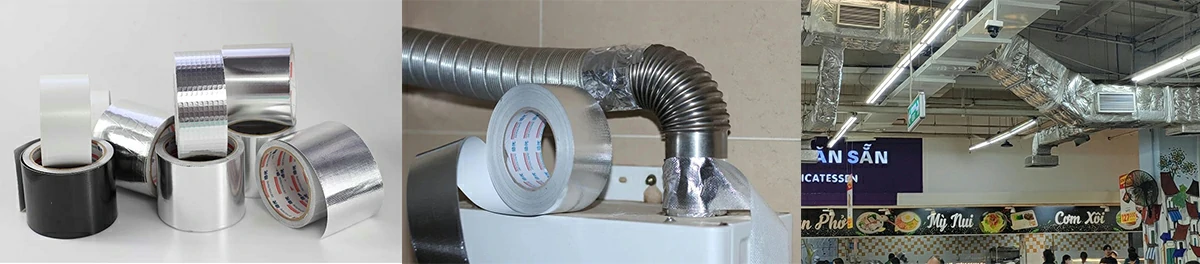
Understanding the different types of aluminum foil tape is essential for selecting the right solution across HVAC, insulation, refrigeration, electronics, and industrial applications. While standard foil tapes are suitable for many general sealing tasks, reinforced constructions such as reinforced aluminum foil tape, FSK tape, Foil Scrim Tape, Aluminum Foil PET Tape, and Aluminum Foil PE Mesh Tape provide necessary strength and durability for demanding environments. Equally important is selecting the correct adhesive system, where acrylic adhesive aluminum foil tape offers excellent weatherability and long-term performance, while rubber adhesive aluminum foil tape delivers superior initial tack for fast installation. Matching the backing, adhesive, and functional requirements to the application ensures reliable performance, longer service life, and lower maintenance costs.
As a leading manufacturer of high-performance technical tapes, Deyou Tape offers a comprehensive line of plain aluminum foil tapes, reinforced Foil Scrim Tapes, FSK tapes, and high-temperature insulation solutions tailored to your exact specifications. Contact our engineering team today to request Technical Data Sheets (TDS), order custom slit widths, or request free sample kits for your next project.