When selecting sealing materials for HVAC, insulation, or industrial use, one of the most common questions is: how long does aluminum foil tape last?
The answer depends on multiple factors, including adhesive type, environmental conditions, surface preparation, and installation quality. In optimal conditions, a high-quality product can deliver an extended aluminum foil tape lifespan of several years with minimal maintenance.
This guide explains what affects durability and how to maximize aluminum foil tape durability outdoors and indoors, helping you choose the right tape with confidence.
What Is the Typical Aluminum Foil Tape Lifespan?
The durability of the tape depends largely on the adhesive system and environmental exposure. Under normal indoor conditions, high-quality tape performs as follows:
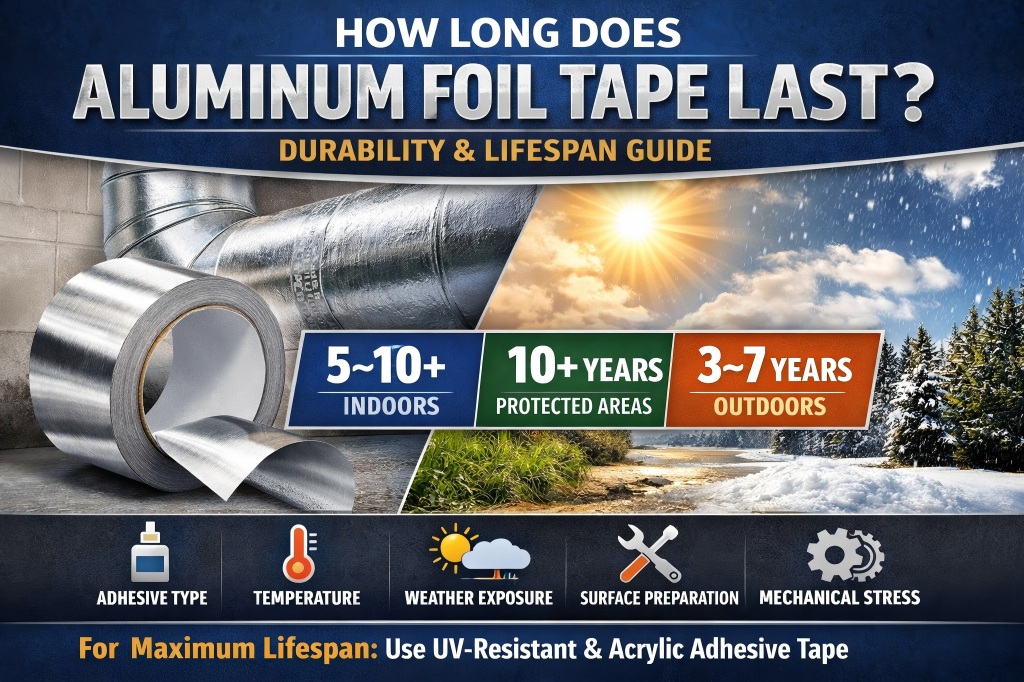
- Ideal Indoor Conditions: When applied to clean HVAC ductwork, it can last 20 to 30 years.
- Standard HVAC/Insulation Systems: Typically lasts 5–10+ years.
- Moderate Outdoor Environments: Generally lasts 3–7 years.
Premium tapes with advanced adhesives can last even longer when properly installed.
Key Factors That Affect How Long Aluminum Foil Tape Lasts
1. Adhesive Type Matters Most
The adhesive system is the primary factor determining how long aluminum foil tape lasts.
Acrylic Adhesive
- Excellent aging resistance
- Superior UV and temperature stability
- Ideal for long-term indoor and outdoor use
Rubber-Based Adhesive
- Strong initial tack
- Better for quick bonding
- Shorter lifespan in high heat or UV exposure
For longevity reassurance, acrylic adhesive is the preferred option.
2. Environmental Conditions
Environmental exposure directly impacts aluminum foil tape lifespan.
Indoor Environments
- Stable temperatures
- Low humidity variation
- No UV exposure
Result: Maximum lifespan
Outdoor Environments
- UV radiation degrades adhesive
- Rain and moisture affect bonding
- Temperature cycles cause expansion and contraction
This is why aluminum foil tape durability outdoors is typically lower unless UV-resistant materials are used.
3. Surface Preparation
Even the best tape will fail early if applied incorrectly.
For optimal adhesion:
- Ensure surfaces are clean, dry, and oil-free
- Remove dust, grease, or oxidation
- Avoid applying to wet surfaces
Proper preparation significantly extends tape life and prevents early edge lifting.
4. Temperature Exposure
Temperature extremes influence both the foil backing and adhesive.
- High heat may soften adhesives
- Low temperatures reduce initial tack
- Thermal cycling can weaken bonds over time
Always select a tape rated for your operating temperature range.
5. Mechanical Stress and Movement
In dynamic environments, movement can shorten lifespan.
Common stress factors include:
- Vibration (machinery, vehicles)
- Expansion/contraction of materials
- Flexible duct systems
Using thicker or reinforced foil tape improves durability in these conditions.
Aluminum Foil Tape Durability Outdoors
A major concern for many users is aluminum foil tape durability outdoors. Standard tapes are excellent for "controlled" outdoor areas like shaded crawlspaces, but true exterior exposure requires specific ratings.
- Environmental Stressors: UV radiation can break down adhesives, while rain and humidity affect bonding strength.
- Outdoor Lifespan: Standard foil tape lasts 3–5 years outdoors, while high-quality UV-resistant versions can last 5–7+ years.
- Pro Tip: For roof-exposed areas, many professionals transition to an Aluminum Foil Butyl Tape, which uses a much thicker waterproof rubber layer to handle direct rain and snow for decades.
Signs Your Aluminum Foil Tape Needs Replacement
Even though this tape is exceptionally durable, you should inspect your seals every few years for signs of wear:
- Edge Lifting: Indicates moisture or dust has compromised the bond.
- Brittle Backing: If the foil feels "crunchy" or cracks, it has reached the end of its functional life.
- Air Leaks: Whistling sounds or dust accumulation around HVAC seams indicate a failed seal.
- Discoloration: A sign of significant UV exposure.
Timely replacement prevents air leakage, moisture intrusion, and system inefficiency.
How to Extend Aluminum Foil Tape Lifespan
To ensure you get the longest possible life out of your tape, follow these best practices:
- Proper Installation: Apply to clean, dry surfaces using firm pressure or a roller.
- Choose the Right Tape: Use acrylic adhesives for long-term indoor use and UV-resistant tape for outdoor applications.
- Environmental Protection: Avoid direct exposure when possible and seal edges properly to prevent lifting.
Conclusion
So, how long does aluminum foil tape last?
- Ideal Indoor Conditions: When applied to clean HVAC ductwork, it can last 20 to 30 years.
- Standard HVAC/Insulation Systems: Typically lasts 5–10+ years.
- Moderate Outdoor Environments: Generally lasts 3–7 years.
The key to maximizing aluminum foil tape lifespan lies in selecting the right adhesive, preparing surfaces properly, and matching the tape to the application environment.
At Deyou Tape, we manufacture high-performance aluminum foil solutions designed to withstand the toughest conditions. Whether you need the extreme aging resistance of acrylic adhesives or heavy-duty outdoor protection, our tapes provide the longevity and reassurance your projects demand.