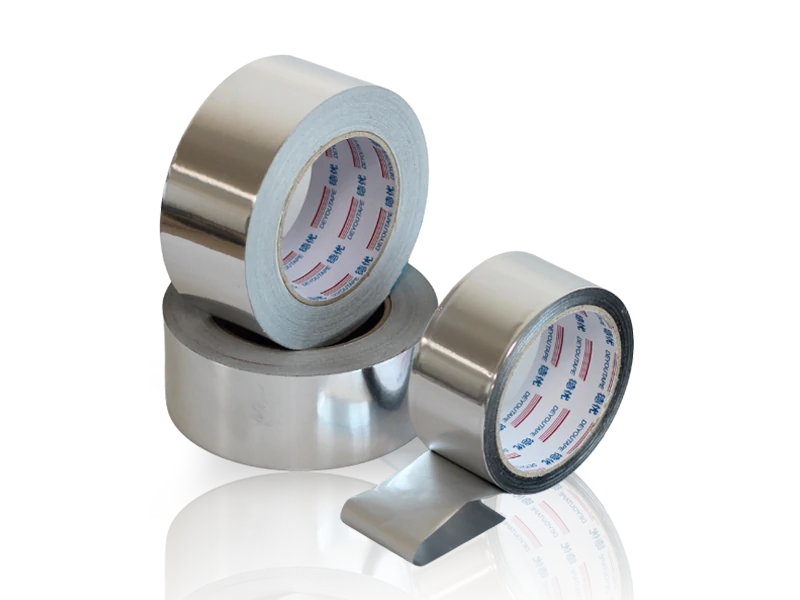
High-temperature environments require sealing materials that can maintain strong adhesion, resist thermal degradation, and provide long-lasting protection. Whether you're sealing HVAC ductwork, insulating industrial equipment, or repairing heat-generating systems, selecting the right Aluminum Foil Tape for High Temperature is essential for both safety and performance. A foundational engineering question often arises during material selection: can aluminum foil tape withstand high heat?
The answer is yes, but performance is highly specialized. Not all aluminum foil tapes are designed for elevated temperatures. Adhesive type, foil thickness, and overall construction all influence how well a tape performs under heat. In this guide, we'll explain how High Temperature Aluminum Foil Tape works, where it should be used, and how to choose the best solution for your application.
Why High-Temperature Aluminum Foil Tape Matters
Standard adhesive tapes often soften, peel, or lose bonding strength when exposed to prolonged heat. Specialized High Temperature Aluminum Foil Tape is specifically engineered to withstand demanding environments while maintaining:
- Strong adhesion
- Airtight sealing
- Thermal insulation capabilities
- Moisture resistance
- Effective heat reflection
- Long-term durability
These vital properties make it an essential material in HVAC, construction, automotive, aerospace, and industrial manufacturing. Aluminum Foil Tape for High Temperature combines a durable aluminum foil backing with a heat-resistant adhesive, typically acrylic or a specially formulated synthetic rubber. The adhesive is chemically engineered to maintain bonding strength under elevated temperatures without excessive shrinkage or adhesive failure. Depending on the product, some tapes also incorporate fiberglass cloth or reinforced scrim to increase tensile strength and durability.
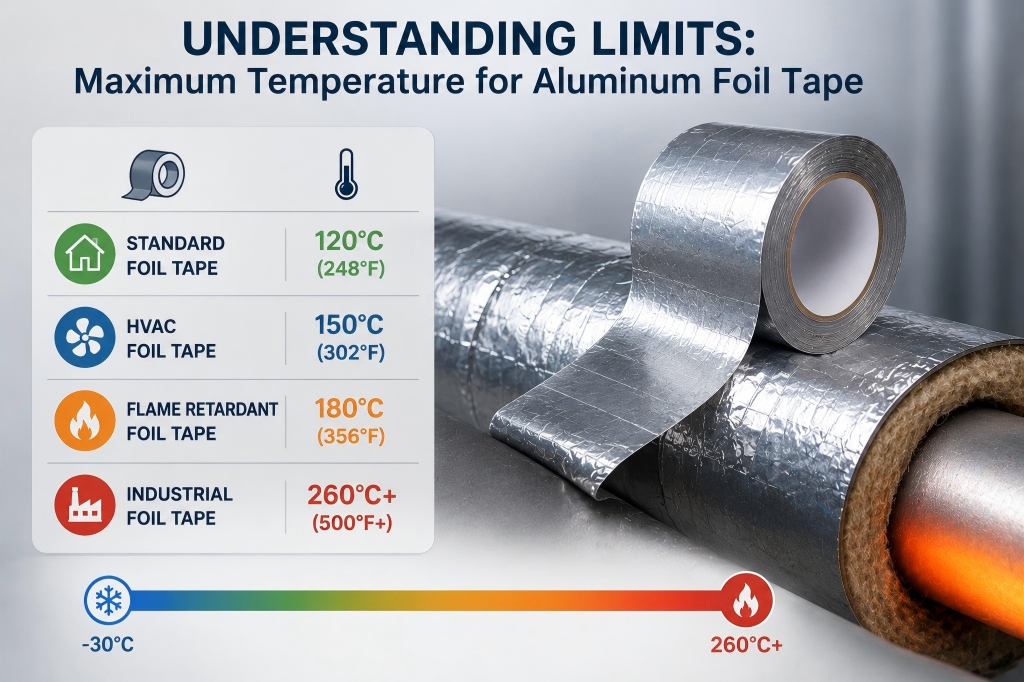
Understanding Limits: Maximum Temperature for Aluminum Foil Tape
To choose the best aluminum foil tape for high temperatures, you must first understand the thermal boundaries of different product classes. While pure aluminum foil features an inherently high melting point of approximately 660°C (1,220°F), the real operational constraint is the chemical composition of the adhesive backing.
What is the maximum temperature for aluminum foil tape? It depends entirely on whether the product utilizes a standard acrylic, a specialized solvent acrylic, or a silicone-based adhesive matrix. The table below outlines standard industrial benchmarks for foil tape temperature resistance:
| Tape Classification | Target Application Profile | Typical Temperature Range |
| Standard Acrylic Foil Tape | General sealing, low-heat vapor barriers | -30°C to 120°C (-22°F to 248°F) |
| HVAC Aluminum Foil Tape | Commercial ductwork, plenum systems | -30°C to 150°C (-22°F to 302°F) |
| Flame Retardant Foil Tape | Fire-rated assemblies, insulation seams | -30°C to 180°C (-22°F to 356°F) |
| Industrial Aluminum Foil Tape | Industrial ovens, aerospace, extreme MRO | Up to 260°C (500°F) or higher |
Technical Note: Operating a tape continuously at or above its maximum rated threshold causes the adhesive layer to dry out, lose its molecular tack, and eventually shear away from the substrate. Always design in a safety buffer of at least 15% below the maximum temperature limit.
Selecting the Best Aluminum Foil Tape for High Temperatures
When selecting the best aluminum foil tape for high temperatures, consider these four core structural factors:
- 1. Heat Resistance: Choose a tape with a continuous service temperature appropriate for your application, such as HVAC duct systems, furnace insulation, exhaust systems, industrial machinery, or heat shields.
- 2. Adhesive Performance: High-quality acrylic adhesives provide long-term durability, excellent aging resistance, strong initial tack, superior holding power, and better UV resistance.
- 3. Foil Thickness: Thicker foil templates generally offer better puncture resistance, improved durability, greater dimensional stability, and a longer overall service life.
- 4. Reinforcement: Applications involving continuous vibration or high mechanical stress benefit from fiberglass reinforcement, glass cloth backing, or scrim reinforcement to increase tear resistance while maintaining flexibility.
HVAC vs. Industrial: Matching Tape to Application
Selecting a heat resistant foil tape requires matching the mechanical properties of the tape to your specific industry vertical.
Aluminum Foil Tape for HVAC Ducts
In modern high-velocity climate control networks, aluminum foil tape for HVAC ducts acts as the primary defense against conditioned air loss. These systems deal with continuous airflow thermal cycles. Utilizing a certified HVAC Aluminum Foil Tape ensures that connections around rigid metal ductwork, blast gates, and mixing boxes remain airtight, maintaining static system pressure even when furnaces or heat pumps operate at peak capacity.
Aluminum Foil Tape for Insulation Systems
Thermal insulation panels, FSK (Foil-Scrim-Kraft) facings, and pipe wraps require a continuous barrier to function effectively. Aluminum foil tape for insulation systems bridges the structural seams between insulation blankets. This prevents hot ambient air from infiltrating chilled water pipelines or cold-storage walls, stopping condensation and preserving the insulation's intended R-value.
Heavy-Duty Industrial Processing
For aerospace shielding, automotive engine bays, and commercial furnace maintenance, standard tape will quickly fail. An Industrial Aluminum Foil Tape often incorporates glass cloth or advanced metal alloys to provide extreme Heat Resistant Aluminum Foil Tape performance, reflecting radiant energy away from heat-sensitive control wires and components.
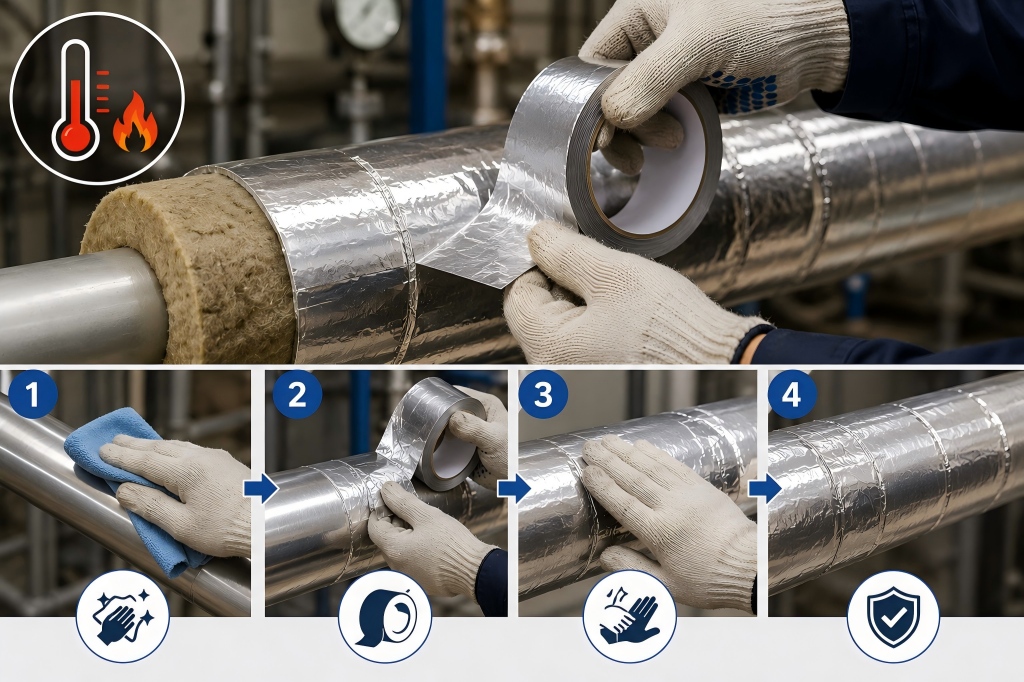
How to Use Aluminum Foil Tape in High-Temperature Areas
Even the highest-rated tape will experience premature failure if installed incorrectly. Follow this professional execution protocol to understand how to use aluminum foil tape in high-temperature areas:
- Surface Decontamination: High heat accentuates surface contamination. Substrates must be completely clean, dry, and free from oil, grease, dust, or rust. Use an industrial degreaser or isopropyl alcohol before tape application.
- Observe Installation Temperature Windows: While a premium tape can withstand high operational temperatures once cured, it should ideally be applied when the substrate ambient temperature is between 0°C and 40°C (32°F to 104°F) to ensure proper initial wet-out.
- Mechanical PSA Activation: High-temperature foil tapes use pressure-sensitive adhesives (PSAs). You must use a plastic squeegee tool to firmly apply pressure across the entire surface of the tape, smoothing out any trapped air bubbles and locking the adhesive into the micro-grooves of the metal surface.
- Adequate Seam Overlap: When splicing high-heat insulation joints, maintain a minimum overlap of 50mm (2 inches) on all sides to prevent edge-lifting during thermal expansion cycles.
Choose the Right High-Temperature Tape with Deyou Tape
Selecting the correct Aluminum Foil Tape for High Temperature ensures safer installations, greater energy efficiency, and longer-lasting performance. From aluminum foil tape for HVAC ducts and aluminum foil tape for insulation systems to industrial manufacturing and high-heat equipment, the right tape can significantly improve reliability while reducing maintenance costs.
At Deyou Tape, we offer a complete range of High Temperature Aluminum Foil Tape, Heat Resistant Aluminum Foil Tape, reinforced foil tapes, and HVAC sealing solutions designed to meet the precise needs of contractors, OEMs, and industrial manufacturers worldwide.
Contact Deyou Tape today to discuss your application or request samples. Our technical team can help you select the ideal heat resistant foil tape solution with the exact foil tape temperature resistance your project demands.