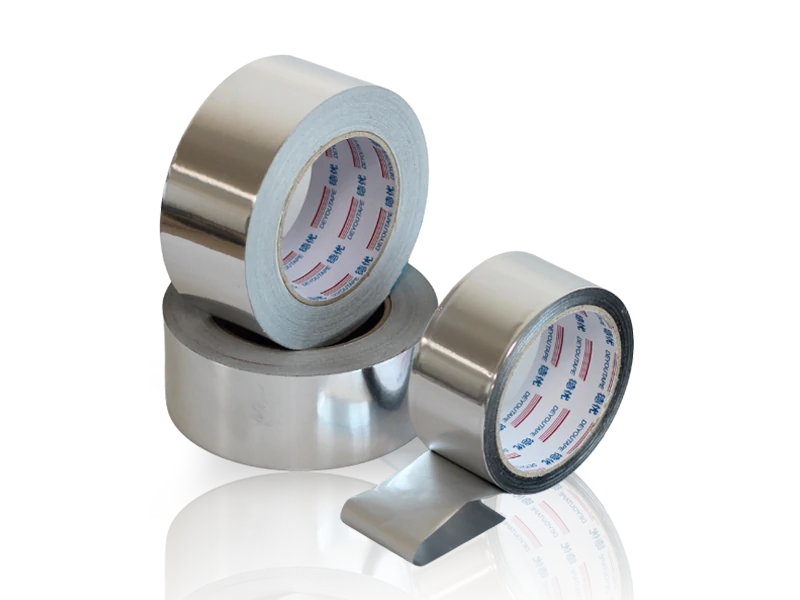
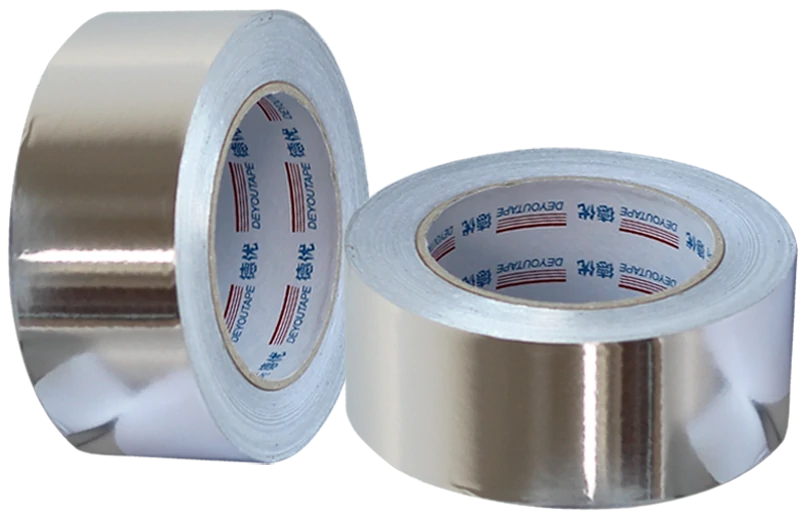
In commercial construction, mechanical engineering, and industrial manufacturing, selecting reliable sealing and insulating materials is vital for maintaining energy efficiency, structural integrity, and code compliance. While standard cloth-backed duct tapes or plastic film pressure-sensitive adhesives are common in general maintenance, they quickly degrade when exposed to continuous thermal fluctuations, ultraviolet (UV) radiation, high moisture, or mechanical tension. Among the many sealing products available today, aluminum foil tape has become one of the most widely used solutions because it combines thermal conductivity, vapor barrier performance, excellent adhesion, and long service life in a single engineered product.
From HVAC air distribution and commercial building insulation to industrial manufacturing, refrigeration facilities, automotive heat shielding, and electrical equipment, aluminum foil tape uses extend far beyond simple repairs. Because different industries require distinct backing structures, adhesive systems, and performance characteristics, selecting the wrong tape can result in air leakage, moisture intrusion, insulation failure, or premature maintenance costs. This comprehensive guide explores the primary applications of industrial aluminum foil tape, explains why it performs exceptionally across diverse environments, and provides actionable recommendations to help engineers, contractors, distributors, and facility managers choose the right tape for their specific projects.
Material Properties: What Makes Industrial Aluminum Foil Tape Unique?
The superior performance of industrial aluminum foil tape stems from its multi-layered construction, which pairs a dead-soft aluminum backing with specialized pressure-sensitive adhesives (PSA). Depending on the application, reinforcement materials such as fiberglass cloth, PET film, kraft paper, or PE mesh are incorporated to improve structural strength and tear resistance. Unlike synthetic polymer films, aluminum is a non-porous metal that inherently resists moisture vapor transmission, UV degradation, chemical solvents, and mold growth.
Several key physical properties distinguish high-performance foil tapes from standard utility tapes:
- Thermal Reflectivity and Conductivity: Aluminum backings reflect up to 95% of radiant heat and light, making them highly effective for thermal insulation and radiant barrier protection while efficiently conducting heat across the surface to eliminate localized hot spots.
- Zero Vapor Permeability: The solid metallic barrier creates an airtight, moisture-proof seal that prevents water ingress, condensation, and air leakage in mechanical systems, ensuring that insulation maintains its thermal efficiency while reducing the risk of mold, corrosion, and material degradation.
- Flame Retardancy and Fire Compliance: Premium foil tapes are formulated with self-extinguishing acrylic or silicone adhesives that meet strict building codes, including UL 723 and ASTM E84 low flame spread and smoke development ratings.
- Broad Operational Temperature Tolerance: Coated with cold-weather or high-heat acrylic adhesives, these tapes maintain bond strength across extreme temperature ranges, typically from -40°C to +150°C (-40°F to +300°F).
- Structural Reinforcement Variants: While plain aluminum foil offers high conformability on irregular contours, heavy duty aluminum foil tape incorporates reinforcing layers—such as two-way fiberglass scrim, woven glass cloth, or polyester (PET) films—to deliver high tensile strength and puncture resistance for demanding industrial environments.
Top Applications of Industrial Aluminum Foil Tape
Industrial aluminum foil tapes are utilized across diverse sectors due to their ability to adapt to complex geometries while providing long-lasting thermal, vapor, and chemical barriers. Below are the primary industrial applications where these high-performance tapes are essential.
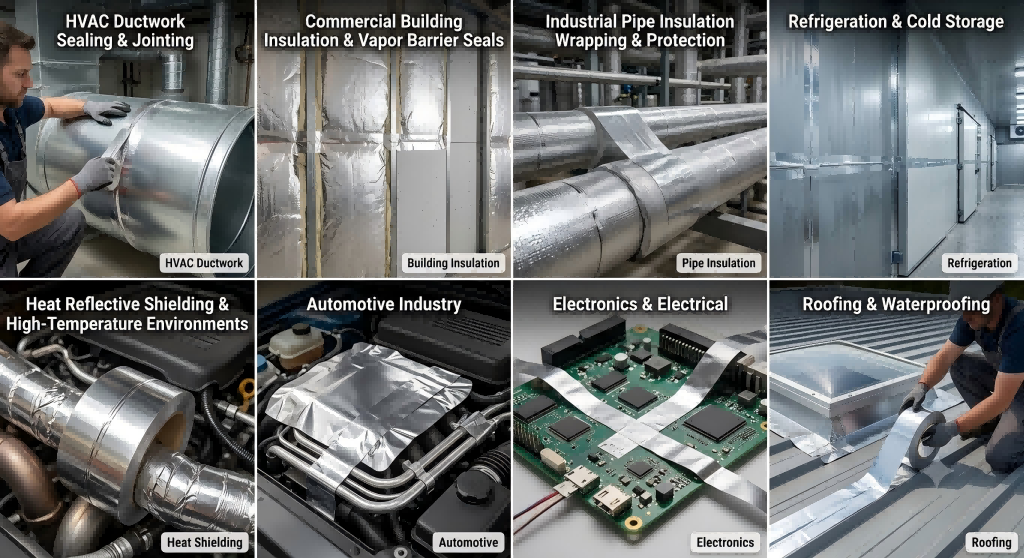
HVAC Ductwork Sealing & Jointing
In commercial and residential climate control systems, maintaining airtight ductwork is critical for energy efficiency and system balance. Specialized HVAC aluminum foil tape is engineered to join and seal rigid sheet metal air ducts, flexible air ducts, and fiberglass duct board systems. Because aluminum foil tape resists moisture, aging, and temperature fluctuations, it provides a significantly longer service life than conventional cloth duct tape, particularly in commercial buildings, hospitals, manufacturing plants, and cleanroom environments. Contractors rely on certified aluminum foil tape for ductwork sealing—specifically products meeting UL 181A-P (for rigid duct board) and UL 181B-FX (for flexible ducting) standards—to prevent static pressure loss, reduce heating and cooling energy waste, and stop ambient moisture from infiltrating air distribution plenums.
Commercial Building Insulation & Vapor Barrier Seals
Building envelopes require continuous moisture control to protect insulation materials from dampness, condensation, and structural mold. Aluminum foil tape acts as an effective foil tape vapor barrier, sealing the joints and seams of foil-faced fiberglass blankets, mineral wool, rigid polyisocyanurate (polyiso) board, and radiant barrier membranes. For large-scale building projects, Foil-Scrim-Kraft (FSK) tape is widely considered the best aluminum tape for commercial insulation. Featuring a tri-directional fiberglass scrim mesh bonded between aluminum foil and heavy kraft paper, FSK tape matches the aesthetic finish and burst strength of commercial insulation facings, ensuring seamless continuity across wall and ceiling assemblies.
Industrial Pipe Insulation Wrapping & Protection
Industrial facilities contain extensive piping systems carrying chilled water, steam, chemicals, compressed air, and process fluids. Uninsulated or improperly wrapped mechanical piping leads to significant energy loss and severe corrosion under insulation (CUI). Heavy-duty aluminum tape pipe insulation wrapping systems protect chilled water pipes, steam lines, and hot fluid conduits in industrial plants, marine environments, and commercial mechanical rooms. Engineers frequently specify aluminum foil glass cloth tape for high-stress pipe wrapping because laminating aluminum foil directly to a tightly woven fiberglass cloth fabric produces a composite tape that resists mechanical abrasion, foot traffic, and chemical exposure while preserving underlying pipe insulation.
Refrigeration & Cold Storage
Cold storage warehouses, refrigerated distribution centers, food processing facilities, and pharmaceutical storage areas require reliable insulation systems capable of controlling condensation. Severe temperature differences between cold interiors and warmer ambient environments create significant moisture challenges that jeopardize insulation performance. Aluminum foil tape seals insulation joints while preventing warm air infiltration, thereby maintaining a continuous vapor barrier that stops ice formation within insulation materials, preserves thermal efficiency, and reduces refrigeration power consumption. Foil Scrim Tape, Aluminum Foil PET Tape, and reinforced insulation tapes are widely specified in cold-storage applications because they combine moisture resistance with long-term mechanical durability.
Heat Reflective Shielding & High-Temperature Environments
When equipment operates near high heat sources, sensitive components must be protected from thermal damage. Heat reflective aluminum tape reflects infrared radiant energy away from critical areas, significantly reducing heat absorption in enclosed spaces. In extreme environments, such as industrial oven exhausts, heat exchangers, and furnace ducting, technicians specify industrial aluminum foil tape for high temperature applications. Coated with heat-stabilized acrylic or silicone pressure-sensitive adhesives, these specialized high-heat foil tapes maintain structural adhesion and thermal reflectivity at continuous operating temperatures exceeding +150°C (+302°F) to +260°C (+500°F).
Automotive Industry
Modern automotive engineering relies on lightweight thermal and acoustic management materials to improve passenger comfort and protect vehicle systems. Aluminum foil tapes are extensively used throughout passenger vehicles, commercial trucks, and specialized transit equipment for three main purposes:
- Engine Compartment Heat Shields: Wrapping wiring harnesses, control modules, and fuel lines located near exhaust manifolds to prevent thermal degradation.
- Vibration and Sound Dampening: Laminating heavy dead-soft aluminum foil with viscoelastic polymers to reduce road noise, body rattle, and panel resonance.
- Body Cavity Sealing: Moisture-proofing door panels, floor pan openings, and firewalls to protect interior electronics from water ingress and air leaks.
Electronics & Electrical
In electronic manufacturing, aluminum foil tapes serve vital functional roles beyond thermal insulation. Specialized conductive foil tapes feature electrically conductive metallic particles dispersed throughout the adhesive matrix, creating complete Z-axis electrical continuity. These conductive foil tapes provide electromagnetic interference (EMI) and radio frequency interference (RFI) shielding for electronic control units, digital display panels, communication cables, and medical devices. Additionally, they are used for grounding static charges in automated manufacturing environments and protecting sensitive microelectronics from electrostatic discharge (ESD).
Roofing & Waterproofing
For outdoor building structures, heavy-gauge aluminum foil tape laminated with thick butyl rubber adhesive creates a resilient, weather-proof flashing solution. The UV-resistant metallic top layer protects the underlying butyl compound from solar breakdown, while the elastomeric butyl adhesive flows into micro-cracks to form an instant watertight seal. Common roofing applications include sealing metal roof deck standing seams, patching gutters and downspouts, waterproofing skylight perimeter flashings, and sealing HVAC roof curb penetrations against harsh weather exposure.
Industrial Manufacturing
In manufacturing and processing facilities, aluminum foil tapes are utilized for precise production operations:
- Chemical Masking: Dead-soft aluminum foil tape protects sensitive metal surfaces during chemical paint stripping, anodizing, and electroplating processes due to its high resistance to harsh acids and solvents.
- High-Speed Web Splicing: High-tack foil tapes join continuous rolls of metal foil, paper, and polymer films in high-speed converting lines without disrupting production flow.
- Appliance Production: Fixing evaporator tubing to cabinet walls in commercial freezer production to ensure maximum thermal transfer and energy efficiency.
B2B Selection Matrix: Matching Applications to Specifications
Selecting the appropriate tape requires matching the application environment with the correct backing construction, adhesive chemistry, and compliance standard. The matrix below provides a reference guide for technical procurement:
|
Industry Application |
Recommended Backing |
Ideal Adhesive System |
Operating Temp. Range |
Primary Code / Standard |
|
Rigid Duct Board Sealing |
Plain or Scrim Foil (2.0–3.0 mil) |
Cold-Weather Acrylic |
-35°C to +120°C |
UL 181A-P Listed |
|
Flexible Air Duct Joints |
Reinforced Foil Scrim / Metalized Film |
High-Tack Acrylic |
-20°C to +100°C |
UL 181B-FX Listed |
|
Commercial FSK Insulation |
Foil-Scrim-Kraft (FSK) Composite |
Flame-Retardant Acrylic |
-30°C to +90°C |
UL 723 / ASTM E84 |
|
Heavy Mechanical Pipe Wrapping |
Woven Glass Cloth Laminated Foil |
High-Performance Acrylic |
-30°C to +150°C |
FAR 25.853 / Industrial Spec |
|
High-Heat Oven Exhausts |
Heavy Dead-Soft Foil (3.0–5.0 mil) |
Heat-Stabilized Silicone |
Up to +260°C (+500°F) |
High-Temp Industrial Grade |
|
Sub-Zero Cold Storage |
Soft Aluminum Foil |
Low-Temp Solvent Acrylic |
-40°C to +80°C |
Food Contact / FDA Compliance |
|
Roofing & Outdoor Flashing |
Heavy Foil + Poly Film Reinforcement |
Thick Elastomeric Butyl Rubber |
-20°C to +90°C |
UV Outdoor Weathering |
|
EMI / RFI Cable Shielding |
Conductive Aluminum Foil |
Conductive Particle-Filled PSA |
-20°C to +130°C |
How to Select the Right Aluminum Foil Tape
Choosing the right tape involves balancing environmental conditions, mechanical requirements, surface compatibility, and regulatory standards before specifying a product. Consider the following technical factors during the selection process:
- Analyze Mechanical Tension: Determine if the tape will experience continuous pulling, vibration, or airflow pressure, keeping in mind that unreinforced plain foil works well for static metal-to-metal seams, whereas applications under dynamic tension require reinforced options like Foil Scrim or Glass Cloth tape to prevent tear propagation.
- Verify Temperature Parameters: Consider both ambient installation temperatures and long-term operating extremes, specifying cold-weather acrylic formulations for unheated winter installations and silicone-based adhesive systems for high-heat exhaust systems.
- Evaluate Environmental Exposure: Check whether the installation will be exposed to direct outdoor UV light, chemical solvents, saltwater, or continuous high humidity, opting for solvent acrylic adhesives over synthetic rubber formulations for superior weatherability.
- Confirm Building Code Certifications: Ensure the selected product holds proper third-party certifications (such as UL 181A-P, UL 181B-FX, UL 723, or ASTM E84) to comply with local building regulations and pass safety inspections.
- Evaluate Surface Compatibility: Account for the substrate material—including aluminum, galvanized steel, stainless steel, plastics, insulation facings, and painted surfaces—as different substrates require compatible adhesive chemistries to achieve optimal long-term bonding.
Conclusion
The wide range of aluminum foil tape uses reflects its unmatched versatility across modern industry. Whether sealing HVAC ductwork, protecting industrial pipe insulation, maintaining vapor barriers in commercial buildings, or providing heat shielding in manufacturing facilities, aluminum foil tape delivers reliable performance through its combination of thermal reflectivity, moisture resistance, and durable adhesion. However, because no single tape is ideal for every application, matching the backing construction, adhesive technology, and functional properties to your operating conditions is essential for maximizing energy efficiency, extending equipment life, and reducing maintenance costs.
As a specialized manufacturer of high-performance technical tapes, Deyou Tape produces a comprehensive range of plain aluminum foil, reinforced Foil Scrim (FSK), glass cloth foil, and high-temperature technical tapes designed for global B2B applications. Contact the technical engineering team at Deyou Tape today to request detailed Technical Data Sheets (TDS), order custom slit widths, or request free sample kits for performance testing in your facility.