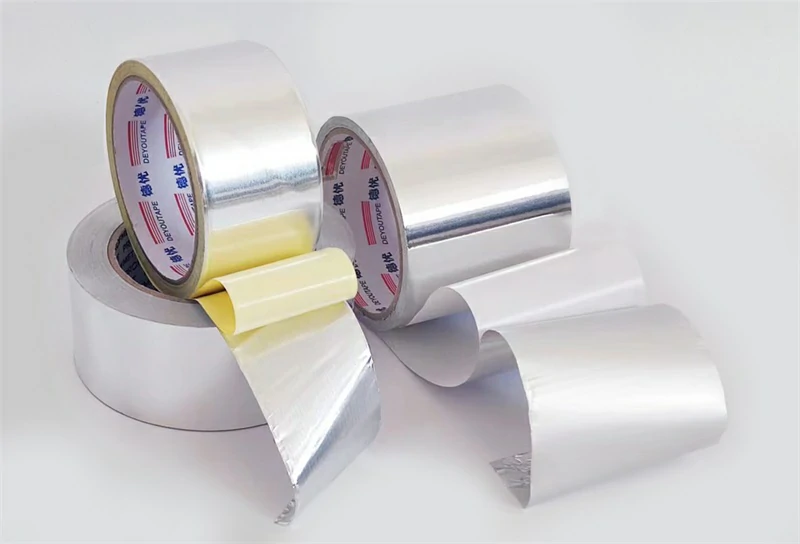
Aluminum foil tape is specifically engineered for permanence, designed to withstand time, moisture, and extreme heat when sealing HVAC ducts or industrial insulation. However, upgrades, system repairs, or temporary masking often require knowing how to remove aluminum foil tape without scratching the underlying metal or leaving a difficult sticky mess. This guide provides a professional approach to how to remove foil tape while protecting your surfaces and cleaning leftover adhesive effectively.
How Long Does Foil Tape Last?
Before beginning, it is helpful to understand the bond you are dealing with. How long does foil tape last? In controlled indoor environments, high-quality acrylic-based tapes can last between 20 to 30 years.
The total lifespan depends on several factors:
- Adhesive Quality: Higher-grade materials last longer.
- Environmental Conditions: Exposure to UV radiation and moisture.
- Temperature Exposure: Constant high heat can affect the bond.
- Placement: Whether the tape was used indoors or outdoors.
Over long periods, the adhesive undergoes "wetting," a process where it bonds deeper into the pores of the surface, making older tape significantly harder to remove than newer applications.
Does Aluminum Foil Tape Leave Residue?
A primary concern for maintenance teams is: Does foil tape leave residue?. The answer depends largely on the adhesive's chemistry:
- Rubber-Based Adhesives: These offer high initial tack but are more likely to break down over time, often leaving a thick, gummy aluminum tape residue.
- Acrylic-Based Adhesives: Designed for UV and heat resistance, these form a strong mechanical bond. While they are less likely to dry out, they can leave a thin, hard-to-see film if pulled too quickly.
In short, does aluminum foil tape leave residue? Yes, especially if exposed to sunlight, heat, or long installation periods, but it can be neutralized with the correct technique.
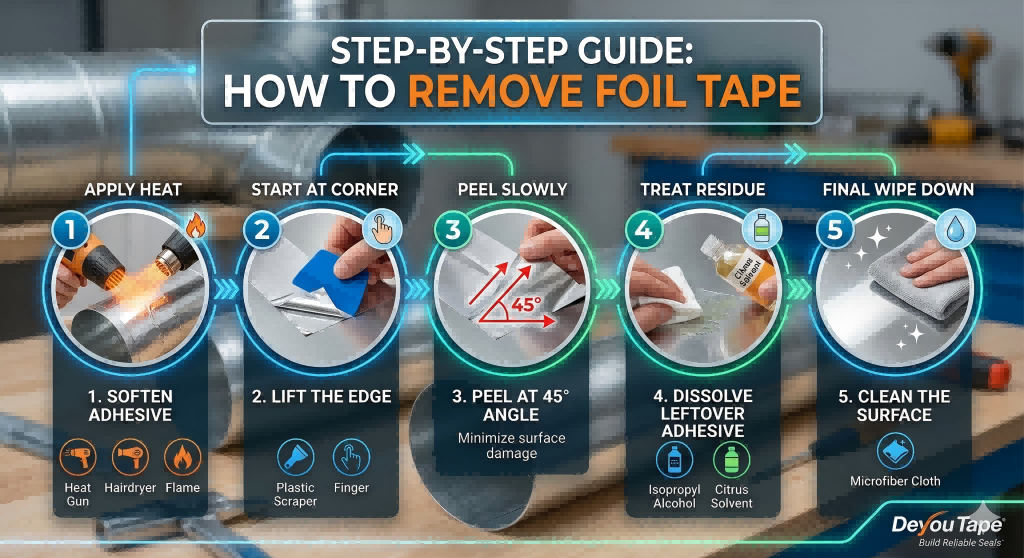
Step-by-Step Guide: How to Remove Foil Tape
To protect delicate surfaces like soft aluminum or plastic, follow this professional removal sequence.
1. Apply Heat
Heat is the most effective way to soften industrial adhesives by reducing their viscosity. Use a heat gun or high-powered hairdryer to warm the tape surface for 30–60 seconds. Avoid excessive heat on painted or plastic surfaces.
2. Start at the Corner
Use your fingernail or a plastic scraper to lift one corner. Avoid metal blades or screwdrivers, as these will likely gouge plastic or scratch metal surfaces.
3. Peel Slowly at a 45-Degree Angle
Slowly pull the tape back on itself at a 45-degree angle. This specific angle helps minimize paint damage, prevents surface tearing, and reduces adhesive transfer. Do not pull straight up at 90 degrees, as this often causes the foil backing to tear away from the adhesive, leaving the glue behind.
4. Treat the Aluminum Tape Residue
If foil tape leaves residue, do not use abrasives. Instead, use a specialized solvent:
For Metal: Isopropyl alcohol (70% or higher) or a commercial citrus-based remover works best.
For Plastic: Test a small area first with a mild soap solution or a plastic-safe adhesive remover to prevent melting or clouding.
For stubborn residue, repeat the solvent process rather than scraping aggressively.
5. Final Wipe Down
Once the residue is gone, wipe the area with a clean, damp cloth to remove any remaining solvent. This is critical if you plan to apply new tape, as solvent traces will prevent the new adhesive from bonding.
Summary Checklist for Success
|
Step |
Action |
Tool |
|
Soften |
Apply consistent heat |
Heat Gun / Hairdryer |
|
Lift |
Peel at a 45° angle |
Plastic Scraper |
|
Dissolve |
Remove sticky film |
Isopropyl Alcohol / Citrus Solvent |
|
Clean |
Remove solvent traces |
Microfiber Cloth |
Surface-Specific Advice
- Metal Surfaces: Usually the easiest to clean; can tolerate moderate heat and standard adhesive removers.
- Painted Walls: Use only low heat and peel very slowly to avoid lifting the paint.
- Glass: Use adhesive removers and avoid sharp tools that may cause scratches.
- Plastic: Use only mild cleaners; excessive heat may warp or damage the material.
Preventing Damage and Excessive Residue
High-quality tape generally does not damage surfaces if they were properly prepared. Damage typically occurs when the tape is removed too quickly, if the surfaces are weak, or if low-quality adhesives were used.
To minimize future aluminum tape residue, apply tape only to clean, dry surfaces and choose high-quality acrylic adhesive foil tapes, which offer the best longevity and cleaner removal. Common mistakes to avoid include using metal tools on delicate surfaces, applying excessive heat, or scraping aggressively.
Conclusion
Understanding how to remove aluminum foil tape properly helps protect surfaces, reduce cleanup time, and prevent costly damage. By combining gentle heat, slow peeling techniques, and appropriate adhesive removers, you can safely remove foil tape with minimal residue.
Whether working on HVAC systems, insulation, or industrial maintenance, proper removal techniques ensure cleaner and more professional results.
Choosing the right tape from the start makes all the difference. At Deyou Tape, we engineer our foil tapes with premium adhesives designed for industrial durability and professional-grade performance.