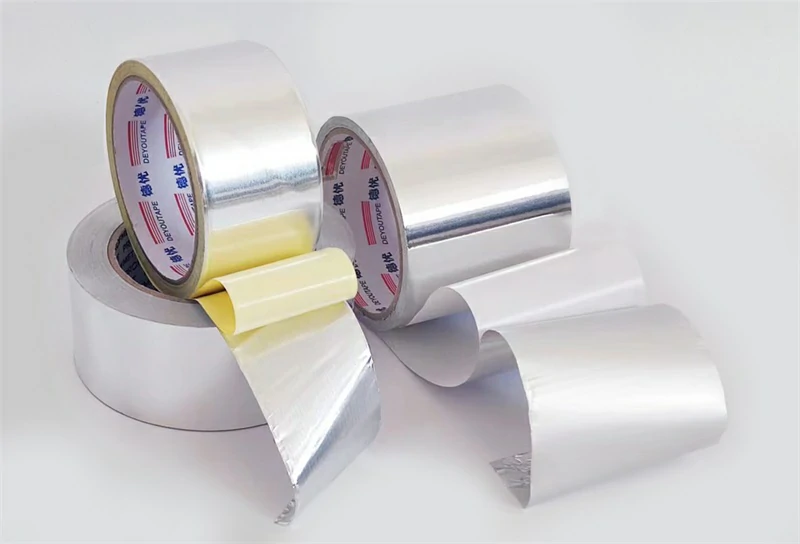
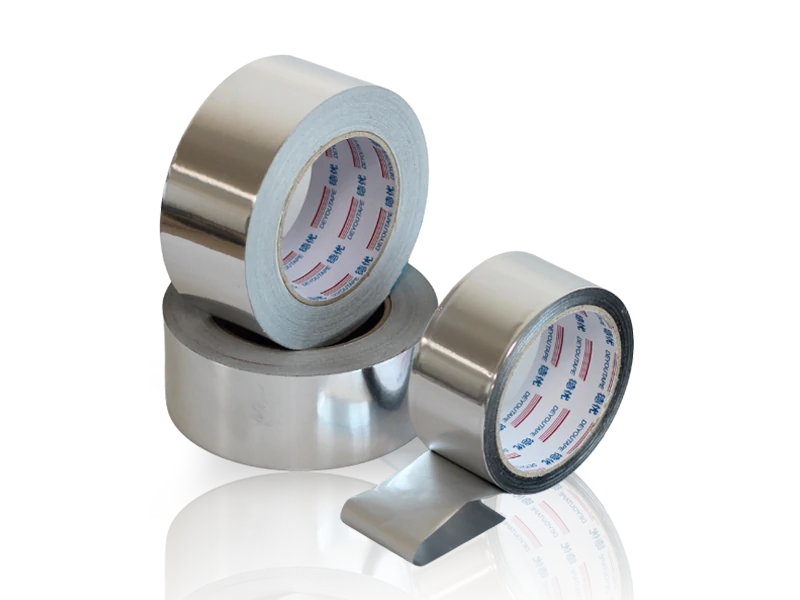
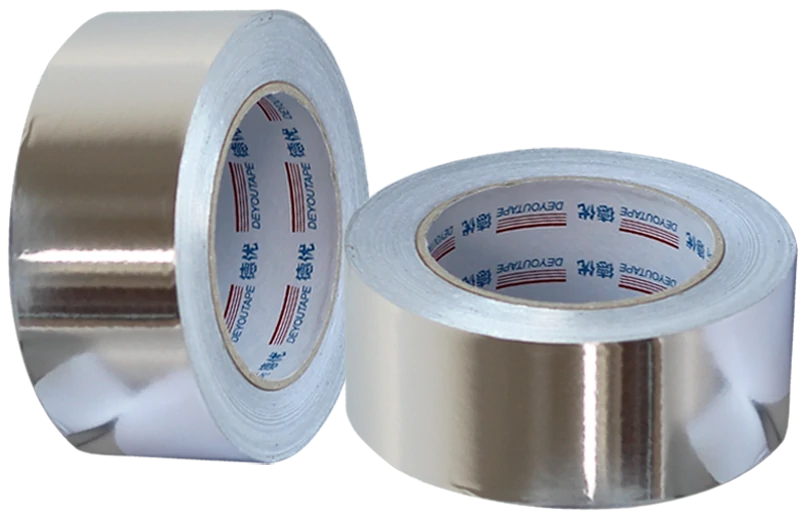
Automotive environments expose materials to heat, vibration, moisture, road chemicals, and continuous temperature changes. For these demanding conditions, automotive aluminum foil tape provides a practical solution for heat reflection, insulation protection, sealing, and other non-structural applications. Its aluminum backing can provide thermal reflectivity and a moisture barrier, while the pressure-sensitive adhesive creates a bond to compatible metal, plastic, insulation, and composite surfaces.
However, automotive foil tape is not a one-size-fits-all product. Applications around an engine or exhaust system may require a high-temperature or reinforced construction, while insulation seams or body-panel applications may place greater emphasis on flexibility, adhesion, and environmental resistance. Selecting the tape according to actual service conditions is therefore essential.
What Is Automotive Aluminum Foil Tape?
Automotive aluminum foil tape is an engineered adhesive tape designed for applications requiring heat reflection, sealing, insulation protection, and environmental protection in vehicle systems. It typically combines aluminum foil with a pressure-sensitive adhesive, while specialized products may incorporate fiberglass cloth, PET film, or mesh reinforcement to improve tensile strength and tear resistance.
The aluminum backing provides a reflective metallic surface and can function as a moisture and vapor barrier, while the adhesive determines bonding performance, temperature resistance, and long-term durability. Different adhesive chemistries and backing constructions make particular products more suitable for high-temperature, mechanically demanding, or general-purpose automotive applications.
Why Is Aluminum Foil Tape Used in Automotive Applications?
Vehicles contain complex mechanical systems that generate intense heat and require protection against environmental elements. Aluminum tape for cars offers several critical material advantages over synthetic plastic films or cloth-backed tapes.
Heat Reflection
The metallic surface of aluminum reflects up to 95% of radiant heat away from sensitive engine components, fuel lines, passenger compartments, and electronic control units. This reflective capability prevents heat soak in enclosed vehicle compartments.
Temperature Resistance
Automotive components can experience significant temperature fluctuations, particularly near engines and exhaust systems. A suitable high-temperature construction can maintain its adhesive bond and physical integrity under elevated temperatures.
However, the phrase high-temperature aluminum foil tape for cars should not be interpreted as meaning that every aluminum foil tape can withstand extreme heat. The actual temperature rating of the backing and adhesive should always be checked before use.
Insulation Protection
Aluminum tape can seal joints and edges in compatible foil-faced insulation materials, helping maintain the continuity of the insulation assembly. It can also protect insulation from moisture and physical damage in suitable applications.
Sealing and Moisture Protection
Aluminum foil forms an impermeable barrier that seals seams against water, road salt, automotive fluids, and vapor intrusion. Protecting underlying body panels and wiring from corrosion and short circuits extends overall vehicle lifespan.
Lightweight and Flexible Construction
Aluminum foil provides a relatively lightweight backing that can be cut and applied to many automotive components. Flexible tape constructions can conform to curved or irregular surfaces, although the degree of conformability depends on foil thickness and reinforcement. It provides high thermal performance without adding unnecessary weight to the vehicle assembly.
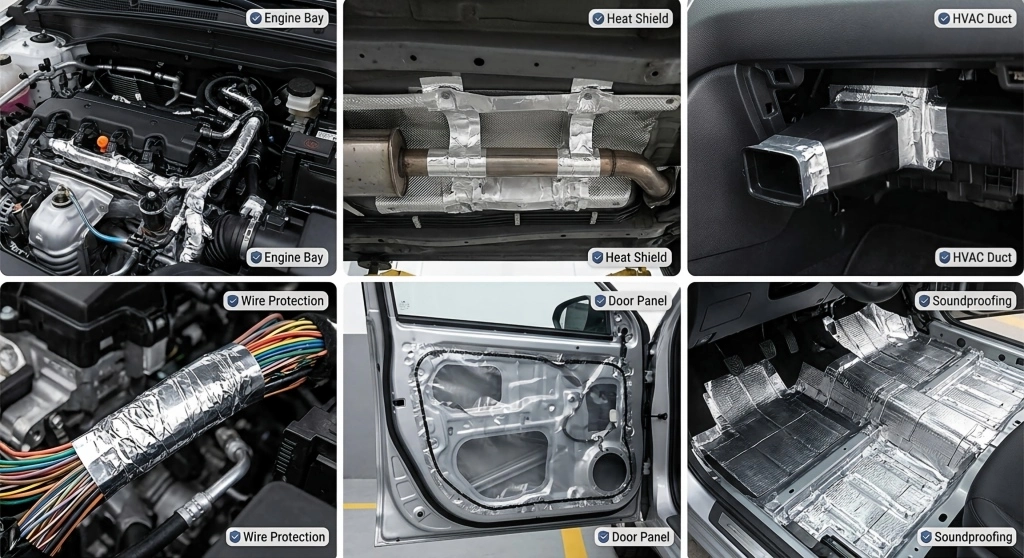
Top Automotive Aluminum Foil Tape Applications
Because of its unique thermal and physical properties, automotive aluminum foil tape is utilized across multiple vehicle systems for both original equipment manufacturing (OEM) and aftermarket maintenance. The most appropriate use depends on the tape's specifications and the temperature, substrate, and environmental conditions of the application.
Engine Compartment Heat Shielding
Engine bays generate localized hot spots that can degrade adjacent components over time. Serving as an effective automotive heat shield tape, it wraps wiring harnesses, sensor cables, and plastic intake manifolds located near hot manifolds to prevent heat-induced electrical failure or plastic deformation.
Exhaust System and High-Temperature Areas
Near exhaust pipes, catalytic converters, and firewalls, technicians specify high temperature aluminum foil tape for cars. This material reflects intense radiant heat away from the floorboards, preventing cabin overheating and protecting underbody components.
Automotive HVAC and Air Duct Insulation
Climate control efficiency depends on maintaining airtight air distribution ducts. Using automotive insulation tape to seal cabin air ducts and climate control housings stops conditioned air leakage and prevents warm engine air from reducing cooling performance.
Wire Harness and Cable Protection
Electrical cables routed through harsh under-hood or underbody environments require continuous shielding. Aluminum foil tape wraps wire bundles, protecting delicate wire insulation from thermal breakdown, fluid splash, and mechanical abrasion.
Automotive Body and Panel Applications
When working on vehicle bodywork or interior door cavities, auto body aluminum tape seals moisture barrier films behind door panels, covers access holes in floor pans, and serves as a durable backing material during specialized panel repairs.
Automotive Insulation and Soundproofing Materials
When combined with viscoelastic damping mats or acoustic insulation, aluminum foil tape seals the joints and seams of soundproofing materials across floorboards, trunks, and firewalls, maximizing sound dampening and thermal isolation.
Types of Aluminum Foil Tape for Automotive Applications
Different automotive applications call for different tape constructions. Instead of selecting a product simply because it is labeled "aluminum tape," evaluate the entire backing and adhesive system.
| Tape Type | Typical Automotive Application |
|---|---|
| Standard Aluminum Foil Tape | General sealing, insulation, and reflective applications |
| High-Temperature Aluminum Foil Tape | Higher-temperature insulation and heat-reflective applications |
| Reinforced Aluminum Foil Tape | Applications requiring greater tear and tensile resistance |
| Aluminum Foil Glass Cloth Tape | High-temperature and mechanically demanding insulation applications |
| Aluminum Foil PET Tape | Lightweight insulation and protective applications |
| Aluminum Foil PE Mesh Tape | Reinforced insulation and sealing applications |
Important selection factors include foil thickness, adhesive type, temperature rating, reinforcement, flexibility, and substrate compatibility. A thicker or stronger tape is not necessarily the best choice; the construction should match the actual application requirements.
Aluminum Tape vs. Duct Tape: The Automotive Showdown
When considering aluminum tape vs duct tape for automotive use, the main difference lies in the backing construction and the performance characteristics required by the application.
Aluminum foil tape has a metallic backing that provides heat-reflective properties and can be used for compatible insulation and sealing applications. Duct tape generally uses a fabric or synthetic backing and is commonly selected for general-purpose repair, bundling, and temporary applications.
| Property | Aluminum Foil Tape | Duct Tape |
|---|---|---|
| Heat reflection | Excellent | Limited |
| Metallic backing | Yes | No |
| Insulation sealing | Suitable for compatible systems | Application dependent |
| Moisture resistance | Product dependent | Product dependent |
| High-temperature use | Requires appropriate grade | Highly product dependent |
| Reinforcement options | Glass cloth, PET, mesh, etc. | Fabric or synthetic backing |
| Typical automotive role | Heat shielding, insulation, sealing | General repair and bundling |
This does not mean aluminum foil tape is universally better. For general temporary repairs, duct tape may be appropriate, while applications involving heat reflection, foil-faced insulation, or specified high-temperature performance may favor an appropriately engineered aluminum foil tape.
How to Select the Right Automotive Aluminum Foil Tape
Start by identifying the actual service conditions rather than selecting a tape based only on the word "automotive." For engine-compartment and exhaust-adjacent applications, temperature resistance should be a primary consideration. For insulation seams, adhesive compatibility and flexibility may be more important, while mechanically demanding applications may benefit from fiberglass or mesh reinforcement.
Also evaluate the following factors:
- Adhesive type: Confirm that the adhesive can maintain the required bond under the expected temperature and environmental conditions.
- Foil thickness: Consider the balance between flexibility, conformability, and mechanical durability.
- Reinforcement: Fiberglass, PET, or mesh can provide additional tensile and tear resistance.
- Surface compatibility: Verify adhesion to metal, plastic, insulation, composite, or painted surfaces as applicable.
- Vibration and movement: Automotive components experience continuous vibration, so adhesive and backing durability are important.
- Moisture and chemical exposure: Consider humidity, road splash, oils, and other environmental factors where relevant.
- Electrical requirements: If electrical insulation or electromagnetic shielding is required, use a product specifically designed and specified for that purpose.
- Service temperature: Do not rely on generic terms such as "heat resistant"; review the manufacturer's technical data for the actual application.
How to Apply Aluminum Foil Tape in Automotive Applications
Proper surface preparation and application can significantly influence adhesive performance. Begin by cleaning the substrate and removing oil, grease, dust, moisture, and other contaminants. Measure and cut the tape to the required length, allowing enough coverage to seal the intended seam without unnecessarily stretching the material.
Apply the tape progressively to the prepared surface, especially when working around curves or irregular areas. Press the tape firmly onto the substrate to establish consistent adhesive contact, paying particular attention to the edges and seams. For demanding applications, inspect the finished installation to ensure that there are no lifted edges, gaps, or areas of incomplete contact.
Always follow the tape manufacturer's application instructions and verify that the selected product is suitable for the temperature, substrate, and environmental conditions of the vehicle.
Conclusion
Automotive aluminum foil tape is a versatile material for heat reflection, insulation protection, sealing, and selected non-structural automotive applications. Its metallic backing makes it particularly useful for managing radiant heat and maintaining the integrity of compatible foil-faced insulation, while reinforced and high-temperature constructions extend its suitability to more demanding environments.
The best product depends on the application. Engine compartments, exhaust-adjacent insulation, automotive HVAC systems, body panels, wire-harness protection, and soundproofing materials can require different combinations of adhesive performance, foil thickness, reinforcement, flexibility, and temperature resistance. Selecting the tape according to actual service conditions is therefore more reliable than choosing based solely on the product name.
For automotive manufacturers, maintenance professionals, distributors, and other industrial buyers, Deyou Tape offers multiple aluminum foil tape constructions, including standard, reinforced, glass-cloth, PET, mesh, and high-temperature solutions. These options allow customers to match tape construction more closely to the thermal, mechanical, and environmental requirements of their applications.